Selecting the right material is the single biggest lever on a machined part's performance, cost, and lead time. This guide breaks down the most common CNC machining materials by what actually matters on the shop floor and in the field—so you can specify with confidence instead of guessing.
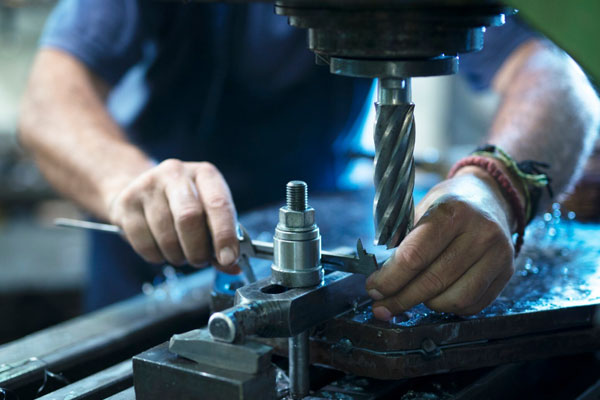
Before naming a material, answer four questions:
What loads and temperatures will the part see?
Does it need corrosion or chemical resistance?
What are the weight constraints?
What is the target cost and volume?
The answers usually narrow the field fast.
Material | Strength | Weight | Corrosion Resist. | Machinability | Typical Use |
6061 Aluminum | Good | Very low | Good | Excellent | Brackets, enclosures |
7075 Aluminum | High | Low | Moderate | Good | Aerospace, structural |
304 Stainless | Good | High | Excellent | Moderate | Food, medical, marine |
316L Stainless | Good | High | Best (marine) | Moderate | Implants, offshore |
Titanium (Gr5) | Very high | Low | Excellent | Difficult | Aerospace, medical |
Brass | Moderate | High | Good | Excellent | Fittings, EMI shields |
Tool Steel | Very high | High | Low (needs coating) | Difficult | Molds, wear parts |
Material | Strength | Temp Resist. | Notes |
ABS | Moderate | Low | Cheap, easy |
POM (Delrin) | Good | Moderate | Low friction, stable |
PC | Good | Moderate | Transparent option |
PEEK | Very high | High | Aerospace/medical grade |
PEI (Ultem) | High | High | Flame-retardant |
Lightweight + corrosion resistant → 6061 aluminum.
High stress + light weight → 7075 aluminum or titanium.
Wet, chemical, or marine → 316L stainless or titanium.
Biocompatible / implantable → 316L or titanium with full MTR.
Tight tolerances on a budget → aluminum or brass (best machinability).
Electrical insulation or low weight → PEEK, PEI, or POM.
Material choice and finish are linked. Stainless often gets passivation; aluminum gets Type II/III anodizing; titanium may be bead-blasted. The finish affects both appearance and function, so specify it alongside the base material.
Our engineering team reviews your drawing and application, then recommends the most cost-effective material that meets performance requirements. We machine aluminum, stainless, titanium, brass, copper, tool steel, and a full range of engineering plastics, with Mill Test Reports available for every shipment.
What is the easiest metal to CNC machine?Aluminum (especially 6061) and brass offer the best machinability—faster feeds, better surface finish, lower tool wear.
Is titanium hard to machine?It is more difficult and slower than aluminum or steel, but entirely standard for an experienced shop. Expect longer cycle times and higher cost.
Which plastic is best for precision parts?POM (Delrin) for dimensional stability and low friction; PEEK or PEI for high-temperature or medical-grade needs.
Can you certify the material?Yes. We provide Mill Test Reports (MTR) to ASTM and ISO standards, with full traceability for regulated industries.

Phone&WhatsApp:+86 13410452313
Email:gavinlee@zhuoguanmetal.com
Address: Room 805-1, Building A, Block 1, Xingzhan Plaza, No. 446, Shajing Nanhuan Road, Shatou Community, Shajing Street, Bao'an District, Shenzhen, Guangdong, China 518104