When a rider squeezes the brake lever, a fraction of a second and a few millimeters of fluid displacement separate them from a controlled stop or a missed apex. Motorcycle brakes are the most critical safety system on the bike, and their performance hinges on precision-machined components. China has emerged as a leading source for high-performance motorcycle brake components, supplying aftermarket brands and OEMs with advanced CNC-machined calipers, rotors, and master cylinders. This guide explores the key components, materials, tolerances, and finishing techniques that define modern motorcycle braking performance, and how to source them from Chinese manufacturers.
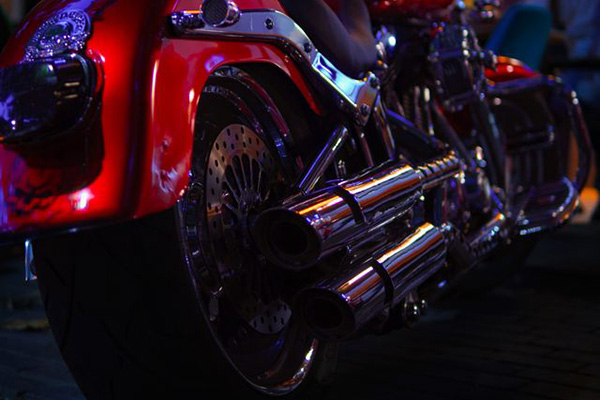
Brakes must operate predictably under extreme conditions: high temperatures, repeated hard applications, and exposure to moisture and contaminants. Every component, from the master cylinder to the caliper piston, must be manufactured with exceptional precision to ensure linear feel, minimal fade, and consistent stopping power.
Heat management: Brake rotors and calipers must withstand and dissipate intense heat without warping, which requires precise material selection and machining.
Hydraulic precision: The master cylinder bore and caliper piston bores must be smooth and accurate to maintain consistent hydraulic pressure and seal integrity.
Wear resistance: Brake components are exposed to friction and abrasive conditions, necessitating surface treatments like hard anodizing, DLC coating, or passivation.
Zero runout: Rotors must be perfectly flat to prevent pulsation and uneven pad wear.
Chinese CNC shops serving the motorcycle brake market typically operate 4- and 5-axis machining centers with in-house finishing lines, delivering components that meet international braking standards such as ECE R90 and FMVSS 122.
Billet calipers are machined from solid blocks of 6061 or 7075-T6 aluminum, offering superior strength and stiffness compared to cast calipers. Key features include:
Piston bores: H7 tolerance (e.g., 30mm +0.021/+0.000) with surface finish Ra 0.4μm or better for seal longevity.
Fluid passages: Cross-drilled and deburred to ensure smooth hydraulic flow.
Threads: Class 6H for banjo bolts (M10x1.0) and bleed screws.
Pad retention: CNC-machined slots or pins for secure pad mounting.
After machining, calipers are Type III hard anodized (25-50μm) to resist wear and corrosion, and often assembled with pistons and seals before shipment.
Performance rotors are machined from stainless steel (410, 420) or cast iron. The rotor surface is ground to a flatness of<0.05mm and often drilled or slotted for heat dissipation and gas venting. Key features include:
Friction surface: Ground to Ra 0.8-1.6μm for consistent pad contact.
Mounting holes: Precise drilling for carrier bolts or button fasteners.
Full-floating design: Rotors with carriers (machined from 7075 aluminum) allow thermal expansion without distortion.
Chinese rotor manufacturers can produce custom diameters (260-320mm) with various hole patterns to match popular sportbike and cruiser models.
The master cylinder converts lever input into hydraulic pressure. CNC machining from 6061 or 7075 aluminum ensures a smooth bore and accurate piston fit. Features include:
Bore diameter: H7 tolerance for piston fit, with surface finish Ra 0.2-0.4μm.
Fluid reservoir: Machined with threaded ports for cap and sight window.
Lever pivot: Precision-machined boss for smooth lever action.
After machining, master cylinders are often anodized (black, silver, or gold).
These structural components connect calipers to the fork or swingarm. Machined from 6061 or 7075 aluminum, they must be precise to ensure correct caliper alignment. Key features include:
Mounting holes: Positioned to ±0.05mm to ensure proper rotor engagement.
Rigidity: Ribbing and cross-sections to minimize flex under heavy braking.
6061-T6 aluminum – Standard for calipers, master cylinders, and carriers. Good machinability, anodizable.
7075-T6 aluminum – High-strength billet for high-performance calipers and carriers. Stronger than 6061 but more expensive.
Stainless steel (410, 420) – Rotor discs, offering good wear resistance and hardness.
Stainless steel (303, 304, 316) – Fasteners, mounting hardware, and some rotor carriers.
Cast iron – Some high-performance rotors for improved heat dissipation and feel.
Engineering plastics (PEEK, PTFE) – For dust seals, piston guides, and pad insulation.
Surface finishes:
Hard anodizing (Type III): For calipers and master cylinders to resist wear and corrosion.
Passivation: For stainless steel rotors and hardware to remove free iron.
DLC coating: For reducing friction on sliding pins and piston surfaces.
Polishing: For cosmetic covers and visible components.
Brake components are safety-critical and demand rigorous quality assurance. QC measures include:
CMM inspection: For caliper bores, master cylinder bores, and rotor flatness.
Roundness measurement: For piston bores (roundness<0.005mm).
Surface finish measurement: Profilometer for sealing surfaces.
Pressure testing: For calipers and master cylinders (e.g., 500 psi air or fluid).
Flatness measurement: For rotors (<0.05mm).
Hardness testing: Rockwell for aluminum and steel parts.
Chinese suppliers provide FAIR (First Article Inspection Report) with dimensional data, material certifications, and test results. Many also offer assembly of complete calipers with pistons, seals, and pads.
Step 1: Verify brake component experience – ask for references from brake brands or aftermarket distributors. Suppliers with ECE R90 or FMVSS compliance are preferred.
Step 2: Assess material and precision capability – can they machine 7075 aluminum and stainless steel? What is their best achievable tolerance (±0.01mm)?
Step 3: Evaluate finishing capabilities – in-house hard anodizing or DLC coating? In-house finishing ensures consistent quality and shorter lead times.
Step 4: Request a sample part – e.g., a caliper or rotor. Inspect dimensions, surface finish, and pressure tightness.
Key clusters: Guangdong (Dongguan, Shenzhen) – rapid prototyping and agile production; Jiangsu (Kunshan, Zhangjiagang) – precision and high-volume efficiency.
Brake components are produced in batches from 20 to 5,000 units. Pricing benchmarks:
Billet caliper (4-piston, 7075, hard anodized, assembled): $15-25 (100+ pcs)
Floating rotor (stainless, 320mm, drilled): $12-20 (100+ pcs)
Master cylinder (6061, anodized, assembled): $8-15 (100+ pcs)
Brake carrier (7075, anodized): $5-10 (200+ pcs)
Lead times: Prototyping 10-15 days; production 20-30 days. Hard anodizing adds 5-7 days. Air shipping 3-7 days, sea 30-45 days.
MOQ: For custom calipers, 50-200 units typical; prototypes (5-20 units) accepted at higher per-unit cost.
Leaking caliper piston seals – Prevention: specify roundness<0.005mm and Ra 0.4μm on bores. Require 100% pressure testing.
Uneven rotor runout causing pulsation – Prevention: specify flatness<0.05mm and runout <0.08mm. Use surface grinding for final flatness.
Anodizing color inconsistency – Prevention: Provide a physical color sample and require batch consistency reports. Use same tank and dye lot.
Thread galling on banjo bolts – Prevention: specify anti-seize coating or use steel thread inserts in caliper and master cylinder.
E-bike and electric motorcycle brakes – Regenerative braking integration requires specialized caliper designs and sensor mounts.
Wireless brake pressure sensors – Machined recesses for pressure sensors in master cylinders and calipers for data logging.
Additive manufacturing for lightweight carriers – 3D printed titanium brake carriers with lattice structures, finished on CNC.
Sustainable coatings – Non-hexavalent anodizing and water-based paints becoming standard.
High-performance motorcycle brakes depend on precision-machined components that withstand extreme conditions while delivering reliable, predictable stopping power. China's CNC machining ecosystem produces motorcycle brake calipers, rotors, and master cylinders that meet the demands of sportbike, cruiser, and racing applications. By selecting suppliers with advanced machining, finishing, and quality control capabilities, you can source components that enhance rider confidence and safety. Start with a trial part, verify fitment and performance, and scale to full production.
Ready to source precision CNC machined brake components from China? Contact our engineering team with your part specifications. We'll connect you with manufacturers experienced in brake systems. Free DFM analysis and quoting available.
A: 7075-T6 aluminum offers the best strength-to-weight ratio and is standard for racing calipers. 6061-T6 is a good lower-cost alternative.
A: Yes, some specialize in 6Al-4V titanium pistons for weight reduction and heat resistance. Machining titanium requires rigid setups and carbide tooling.
A: Ra 0.4μm or better, with roundness<0.005mm, to ensure seal longevity and leak-free operation.
A: Some suppliers have ECE R90 or FMVSS 122 certifications for brake components intended for sale in regulated markets. Ask for certificates.
A: For a new design, tooling 1-2 weeks, production 2-3 weeks, and finishing 1 week. Total ~4-6 weeks.
A: Yes, some suppliers offer full system solutions, including matched master cylinder and caliper assemblies for specific bike models.
A: Mounting hole positions are typically ±0.05mm to ensure rotor centering on the hub. Chinese shops use CMM to verify.
A: Request eddy current thickness measurement (25-50μm for Type III) and visual inspection under good lighting for color uniformity and coverage.
Ready to enhance your motorcycle braking performance with precision CNC machined components from China? Contact our engineering team with your part specifications. We'll match you with manufacturers experienced in caliper, rotor, and master cylinder production. Free consultation and prototyping support offered.

Phone&WhatsApp:+86 13410452313
Email:gavinlee@zhuoguanmetal.com
Address: Room 805-1, Building A, Block 1, Xingzhan Plaza, No. 446, Shajing Nanhuan Road, Shatou Community, Shajing Street, Bao'an District, Shenzhen, Guangdong, China 518104